The world of packaging sourcing is changing, and choosing where your packaging comes from is no longer simply a question of cost.
With increasing pressure on lead times, supply chain resilience and flexibility, brands are rethinking how and where their packaging is manufactured.
Rather than choosing between Asia and Europe, the smartest sourcing strategies are increasingly about combining the strengths of both.
The Changing Face of Global Packaging Sourcing
For many years, Asia has been a natural choice for businesses looking for high-quality packaging at competitive prices, particularly for larger production volumes and technically demanding specifications.
Established manufacturing expertise, advanced printing technologies, economies of scale and a broad range of material options have made Asian production an important part of global packaging supply chains.
And those advantages haven’t disappeared.
However, recent years have highlighted the importance of looking beyond the unit price. Fluctuating freight costs, geopolitical uncertainty, changing customer demand and pressure to reduce lead times have encouraged businesses to reconsider how they structure their packaging supply.
At the same time, European manufacturing is becoming an increasingly attractive option, particularly where shorter lead times, smaller production volumes or greater responsiveness are priorities.
The result? A more flexible approach to sourcing, where geography is no longer an either/or decision.
Asia: Scale, Expertise and Competitive Manufacturing
Asia continues to play an essential role in global packaging production, offering significant advantages for the right projects.
For brands with established product ranges, predictable demand and larger order volumes, Asian manufacturing can deliver excellent value.
Key benefits include:
- Competitive pricing: Economies of scale can make larger production runs particularly cost-effective
- Advanced manufacturing capabilities: Access to sophisticated printing, lamination and converting technologies
- Material innovation: Extensive expertise in high-performance films, barrier structures and recyclable packaging developments
- Production capacity: The ability to support substantial volumes and complex packaging programmes
- Established supply networks: Experienced manufacturers supporting international brands and markets
Of course, longer shipping distances mean that forecasting, inventory management and production planning are particularly important.
For customers with good demand visibility, however, these factors can be managed effectively as part of a well-structured supply strategy.
Europe: Speed, Flexibility and Responsiveness
European packaging production offers a different set of advantages, which can be particularly valuable in today’s fast-moving markets.
With manufacturing closer to UK and European customers, businesses may benefit from shorter transportation times, more responsive supply arrangements and greater flexibility when requirements change.
Depending on the manufacturer, material and format, European production can offer:
- Shorter lead times: Reduced transportation distances and potentially faster replenishment
- Lower minimum order quantities (MOQs): Opportunities for smaller production runs, subject to specification and manufacturing requirements
- Greater flexibility: A potentially better fit for promotional campaigns, seasonal products and changing demand
- Simplified logistics: Shorter supply routes and potentially less exposure to long-distance freight disruption
These benefits can be particularly relevant for new product launches, emerging brands or businesses managing a large number of SKUs with different volume requirements.
However, European manufacturing isn’t automatically the most cost-effective or quickest solution for every project.
Capabilities, material availability, production schedules and order volumes all need to be considered.
The real opportunity lies in understanding where European production adds value – and where Asian manufacturing remains the stronger choice.
Finding the Right Balance: Cost, MOQ, Lead Time and Flexibility
There is no universal formula for choosing the best manufacturing location.
A packaging solution that works perfectly for one customer may not be appropriate for another, even when the format and material appear similar.
The key is to evaluate the complete requirement rather than focusing on a single factor.
| Consideration | Asian Production | European Production |
|---|---|---|
| Unit cost | Often advantageous for larger volumes | Can be competitive for smaller or time-sensitive requirements |
| MOQ | Often better suited to higher-volume runs | Potentially more flexible for smaller runs |
| Lead time | Longer international shipping requirements | Generally shorter transport distances |
| Flexibility | Strong for planned, repeat orders | Can be advantageous for changing requirements |
| Technical capability | Extensive manufacturing and material expertise | Specialist capabilities vary by producer |
| Stock planning | Benefits from reliable forecasts | May allow more responsive replenishment |
These are general considerations rather than fixed rules. The right decision depends on the specification, supplier capabilities, production availability and total delivered cost.
And this is where a more strategic approach becomes valuable.
Why the Best Solution Might Be Both
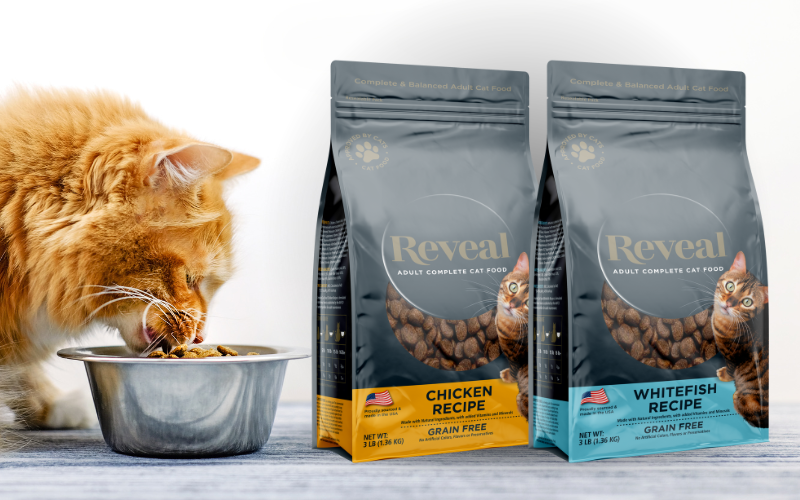
Imagine a pet food brand with several established, high-volume products alongside smaller, seasonal or newly launched ranges.
Its core packaging requirements may be ideally suited to Asian manufacturing, where production volumes and forecasting allow the business to benefit from competitive pricing and established technical capabilities.
But what about a limited-edition product, a new range being tested in the market or a smaller-volume SKU requiring greater flexibility?
European production could potentially provide a more appropriate solution.
Rather than forcing every packaging requirement into the same manufacturing model, the brand can consider different sourcing routes according to its needs.
This approach can also support business continuity.
By understanding alternative production options, businesses may be better positioned to respond to changing market conditions, unexpected demand or supply chain disruption.
Of course, using different manufacturing locations requires careful management of specifications, colour consistency, materials and quality expectations.
The objective isn’t simply to have more suppliers. It’s to have a smarter, more coordinated supply strategy.
The Value of a Global Packaging Partner
For packaging buyers, managing different manufacturing locations can create additional complexity.
Different technical capabilities, production processes, lead times and commercial arrangements all need to be understood.
This is where working with a packaging partner that has access to multiple sourcing regions can make a real difference.
At Law Print, our established international manufacturing network has long supported customers across the UK, Europe and overseas markets, particularly through our expertise in flexible packaging.
Our sourcing capabilities across Asia, including the wider SCGP manufacturing network, remain an important part of that offering.
Alongside these established relationships, we are continuing to develop our European production options, giving customers access to a broader range of potential solutions.
Our role is to understand each customer’s requirements and identify the most appropriate manufacturing route based on the complete packaging brief.
That means considering much more than price alone:
- What is the required delivery date?
- What are the anticipated annual volumes and order quantities?
- Is the product established or still in development?
- Does the packaging require specialist materials or features?
- How important is flexibility for future orders?
- What are the total costs of production, shipping and inventory?
- Could a combination of manufacturing locations provide a better long-term solution?
By bringing these considerations together, we can help customers make informed sourcing decisions that support both their immediate requirements and longer-term objectives.
Looking Beyond the Unit Price
One of the biggest mistakes in packaging procurement is comparing manufacturing prices without considering the wider commercial picture.
A lower unit price doesn’t necessarily mean a lower overall cost.
Freight, stockholding, warehousing, minimum order quantities, working capital and the cost of responding to unexpected demand can all influence the final economics of a packaging project.
Equally, choosing a closer manufacturing location doesn’t automatically guarantee better value.
A well-planned, high-volume order manufactured in Asia may still provide the strongest commercial solution.
The most effective sourcing decisions consider total delivered cost, operational efficiency and supply chain resilience, not simply the price printed on a quotation.
And as businesses continue to navigate economic uncertainty, evolving sustainability requirements and changing consumer expectations, this broader perspective is becoming increasingly important.
The Future of Packaging Sourcing Is About Choice
Global sourcing isn’t disappearing. It’s evolving.
Asia will continue to offer important advantages in manufacturing expertise, scale and competitive production, while European capabilities provide valuable opportunities for shorter supply routes, flexibility and responsiveness.
For packaging buyers, the real advantage comes from having access to both – and knowing when each makes commercial and operational sense.
At Law Print, we believe that the future of packaging sourcing isn’t about choosing one region over another. It’s about connecting the right manufacturing capabilities with the right customer requirements, supported by technical knowledge, strong partnerships and effective supply chain planning.
Conclusion: More Options, Better Decisions
There is no single perfect sourcing location for every packaging requirement, and there doesn’t need to be.
By combining the strengths of Asian and European manufacturing, brands can build a more balanced approach that considers cost, MOQ, lead time, flexibility and long-term supply security.
As Law Print continues to develop its global sourcing network and European manufacturing options, our focus remains on helping customers find packaging solutions that work technically, commercially and operationally.
Because the future of packaging sourcing isn’t Asia versus Europe. It’s about having the expertise, connections and flexibility to make the right choice.
Looking to review your packaging sourcing strategy? Whether you’re exploring alternative manufacturing locations, looking to improve lead times or reviewing the costs and flexibility of your current supply, speak to the LP team about how our global packaging expertise can help.
Contact us on +44 (0) 161 440 7302 or sales@lawprintpack.co.uk. Alternatively, follow this link to complete our contact form.