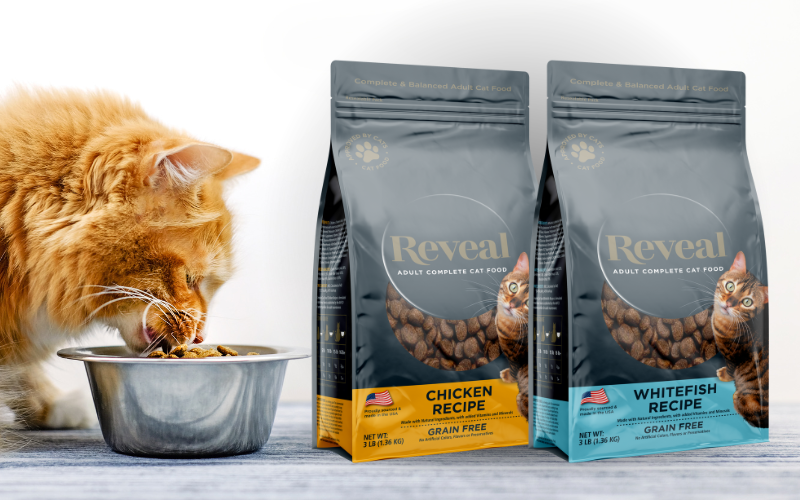

Great packaging is about much more than what you see on the shelf.
Behind every attractive bag, pouch or container are countless technical details that protect the product, support efficient production and deliver the experience consumers expect.
Most of these details go completely unnoticed – until something goes wrong.
It’s the Little Things That Make a Big Difference
When we think about packaging, our attention naturally goes to the design, colours, branding and overall shelf appeal.
And rightly so. Packaging plays an essential role in attracting consumers and communicating a brand’s identity.
But what about the details you don’t immediately see?
The strength of a seal. The performance of a barrier film. The positioning of a zipper. The accuracy of a printed colour. The way a bag behaves on a filling line.
These might seem like minor considerations, but each can have a significant impact on product quality, production efficiency, customer satisfaction and ultimately, a brand’s reputation.
At Law Print, we know that successful packaging isn’t simply about looking good. It’s about getting all those important details right.
1. The Seal: Small Detail, Big Responsibility
A packaging seal might only be a few millimetres wide, but it has an enormous job to do.
Whether it’s a stand-up pouch, flat bottom bag or flexible film application, the seal is essential for maintaining pack integrity and protecting the product inside.
Poor seal performance can lead to leaks, contamination risks, reduced shelf life, product waste and costly customer complaints.
And seal performance isn’t determined by the packaging material alone.
Sealing temperatures, pressure, dwell time, material structure, product contamination in the seal area and filling-line conditions can all influence the final result.
A packaging specification that works perfectly on one filling line may require adjustments when introduced onto another.
That’s why understanding the relationship between packaging materials and filling equipment is so important.
Through technical discussions, testing and controlled trials, potential sealing challenges can be identified before they become expensive production problems.
2. Barrier Performance: Protecting What You Can’t See
A beautifully printed pack is of little value if the product inside doesn’t remain in the condition the consumer expects.
Barrier properties are one of the most important – and least visible – aspects of packaging performance.
Depending on the product, packaging may need to provide protection against oxygen, moisture, light or aroma loss.
For products such as pet food, coffee, snacks and other sensitive food applications, selecting the appropriate barrier structure can be critical to maintaining freshness, quality and shelf life.
But not every product requires the same level of protection.
Over-specifying a material can add unnecessary cost or complexity, while under-specifying it can compromise product performance.
The challenge is finding the right balance.
As more brands explore recyclable mono-material structures, understanding barrier performance becomes even more important.
A more recyclable pack still needs to protect the product effectively.
At Law Print, our experience with high-barrier flexible packaging and recyclable material developments helps customers assess structures that meet their technical requirements while supporting wider sustainability objectives.
3. Zippers, Closures and Features: Convenience Is in the Detail
Consumers rarely think about the engineering behind a resealable pouch.
They simply expect it to open easily, close securely and work every time.
But getting those seemingly simple features right involves careful consideration of pack construction, material selection, zipper positioning and filling-line compatibility.
A zipper positioned incorrectly can affect filling efficiency. A closure that is difficult to operate can frustrate consumers. A poorly integrated feature may compromise pack integrity or appearance.
Even the design of a carry handle on a large-format bag can introduce technical challenges, particularly when combined with recyclable mono-material structures.
These details are especially important in categories such as pet food, where consumers may open and reseal the same pack repeatedly over several weeks.
For Law Print, projects involving large flat bottom bags, pocket zippers and integrated handles demonstrate how packaging functionality needs to be considered alongside appearance and material performance.
The best packaging features are often the ones consumers barely notice – because they simply work.
4. Print Quality: Consistency Builds Brand Confidence
Packaging design is one thing. Reproducing that design consistently across thousands or millions of packs is another.
Brand colours, image quality, registration, print finishes and overall consistency all contribute to how a product is perceived on the shelf.
A slight colour variation may seem insignificant in isolation, but place two different production batches next to each other and the difference can become much more noticeable.
For brands operating multiple SKUs, packaging formats or international markets, maintaining consistency becomes even more challenging.
Different materials, print technologies and manufacturing conditions can all influence the finished result.
This is where technical print knowledge and colour management become particularly valuable.
At Law Print, our experience in rotogravure printing, artwork management and colour consistency helps customers translate creative designs into commercially produced packaging.
From premium matt finishes and metallic effects to complex designs across multiple product ranges, the objective is always the same: deliver packaging that reflects the brand as intended, consistently and reliably.
Because consumers might not understand the technical reasons behind a colour variation, but they can certainly notice when something doesn’t look quite right.
5. Filling-Line Compatibility: Where Theory Meets Reality
A packaging design can look perfect on screen, and a prototype can perform beautifully during initial testing.
But the real test often comes when the packaging reaches the filling line.
Material stiffness, coefficient of friction, bag dimensions, gusset construction, seal positioning and many other factors can affect how packaging behaves during automated production.
Even relatively small specification changes can influence machine speeds, handling efficiency or pack presentation.
This is particularly relevant when transitioning to recyclable mono-material structures, which may behave differently from traditional multi-material laminates.
That’s why packaging development should involve the packing operation as early as possible.
Understanding the machinery, filling process and production requirements allows potential challenges to be considered before commercial production begins.
Where appropriate, samples, prototypes and filling-line trials can help confirm compatibility and identify any adjustments required.
Because a packaging solution isn’t truly successful until it works in the environment where it will actually be used.
6. Pack Construction: The Details Behind Performance
The dimensions and construction of a pack can have a surprisingly significant impact on its performance.
A few millimetres can influence how a bag stands on the shelf, how efficiently it fills, how much product it holds or how securely it seals.
Side gussets, bottom gussets, corner seals, zipper placement and material thickness all need to work together.
For larger formats, the demands become even greater.
A 12kg pet food bag, for example, needs to withstand considerable weight during filling, handling, transportation and consumer use.
Features such as pocket zippers and carry handles must be integrated without compromising the structural integrity of the pack.
Getting these details right requires technical knowledge, practical experience and close collaboration between packaging manufacturers, suppliers and filling operations.
And sometimes, the difference between a good pack and a great pack is just a few millimetres.
7. Testing: Finding Problems Before They Become Problems
One of the most valuable parts of packaging development is often the work that customers and consumers never see.
Material assessments, seal testing, barrier evaluations, print approvals, prototypes and filling-line trials all help identify potential issues before a packaging specification is fully commercialised.
Not every project requires the same level of testing, but understanding the risks and validating critical performance requirements can help avoid unnecessary disruption later.
This is particularly important when introducing new materials, changing suppliers, modifying pack formats or developing packaging for new filling equipment.
A controlled trial may reveal a simple adjustment that prevents a much larger problem during full-scale production.
It is far better to discover a potential issue during development than after thousands of packs have been manufactured.
At Law Print, we believe that good packaging innovation combines creativity with technical knowledge, careful testing and practical validation.
The aim isn’t to eliminate every possible risk – something no packaging supplier can guarantee – but to identify and manage potential challenges before they affect commercial production.
The Real Value of Packaging Expertise
Packaging buyers and brand owners have a lot to consider.
Cost, sustainability, design, consumer convenience, compliance, supply continuity and speed to market are all important.
But the technical details behind packaging performance deserve just as much attention.
A packaging supplier should therefore bring more to the conversation than a quotation and a product specification.
They should understand how materials behave, how packaging is manufactured, how filling lines operate and what can go wrong when different elements aren’t properly aligned.
They should also know when to ask questions, challenge assumptions and recommend testing before proceeding.
This is where experience and collaboration make a difference.
At Law Print, our approach is built around understanding the complete packaging requirement – from initial artwork and material selection through to technical development, manufacturing and delivery.
Working closely with our customers, manufacturing partners and co-packers, we help connect the details that contribute to successful packaging performance.
And with access to the wider SCGP packaging capabilities across Flexible + Rigid formats, we can support an increasingly broad range of packaging requirements.
Conclusion: Great Packaging Is No Accident
The best packaging often appears effortless.
It looks right, protects the product, runs efficiently on the filling line, survives the supply chain and delivers the convenience consumers expect.
But behind that apparent simplicity lies a combination of technical expertise, careful specification, quality control and attention to detail.
From the strength of a seal to the accuracy of a printed colour, every element has a role to play.
And while consumers may never notice those details when everything works perfectly, they certainly notice when something doesn’t.
At Law Print, we understand that successful packaging is about more than producing an attractive pack. It’s about combining technical knowledge, manufacturing expertise and practical experience to deliver solutions that perform throughout their entire lifecycle.
Whether you’re developing a new product, transitioning to recyclable materials, reviewing an existing specification or experiencing packaging performance challenges, our team can help you explore the right solution.
Because when it comes to packaging, it’s often the smallest details that make the biggest difference.
Talk to the Law Print team about how our packaging expertise can help protect your products, support your production processes and bring your next packaging project to life.
Contact us on +44 (0) 161 440 7302 or sales@lawprintpack.co.uk. Alternatively, follow this link to complete our contact form.